
Written by Omar Auf
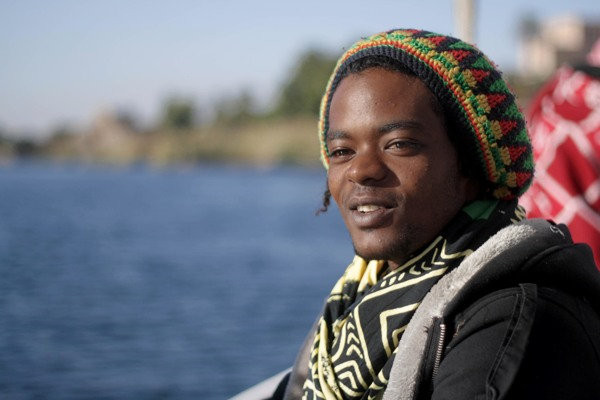
Mostafa, 24, is a Nubian Egyptian whose family owns a guest house on Elephantine Island, Aswan. Credit: Enas El Masry
Adele James, a black actress portraying Cleopatra, the last active queen of ancient Egypt whose father was Ptolemaic, in the Queen Cleopatra episode of Netflix’s new docu-series, African Queens, sparked a worldwide debate. The issue naturally hit Egyptian society closer to home than others, which led to James’ portrayal of Cleopatra to be formally addressed on the official level and informally on social media and in everyday conversations.
Egypt’s Response
There were several responses from the Egyptian side, which garnered widespread support, to what is largely considered historical inaccuracy. The Egyptian Supreme Council of Antiquities issued a statement clarifying that historians described Cleopatra as light skinned with Hellenistic traits and stated that portraying her otherwise is a “forgery of history”. In addition, the newly-launched channel, Al-Watha’eqeya, has announced the production of its own documentary on Cleopatra.
Another method of pushing back, this time on social media, garnered mass engagement. The ‘Egypt for Egyptians’ campaign – expressed through the hashtag in English and Arabic – has Egyptians taking pictures of themselves and placing them next to busts of ancient Egyptians. It is intended to show the similarities in appearance between some Egyptians and their ancient counterparts.
The social media campaign has succeeded in raising awareness of the issue. However, it must be treated with nuance and care, so as to not make segments of the population feel excluded or erased from the idea of what makes an Egyptian. There are problematic aspects of ‘Egypt for Egyptians’ in its current iteration that must be addressed.
Nuance and Inclusion are Essential
Egypt for Egyptians must be caveated by the fact that it does not seek to define ‘Egyptianess’ by appearances associated with attribution to certain races, but rather shows that – through illustrating some modern Egyptians’ likenesses to the sculptures of their ancient counterparts – there is a cultural connection that appreciates historical accuracy between those living on the land today and those who lived on it thousands of years ago. This connection should not preclude other Egyptians who bear little resemblance to the busts of an age long passed from being able to celebrate ancient Egyptian culture.
Moreover, in the name of the same historical accuracy driving the campaign, a recognition of the Egyptianess of Egyptians who do not look like Cleopatra and other historical figures would serve to make a more inclusive campaign focused on national pride for a rich history rather than select individual resemblances to images of select ancient Egyptians.
Furthermore, Cleopatra is, through her known lineage, Ptolemaic. Yet, Egyptians claim her for their own as a cultural symbol. Egyptologist Monica Hanna wrote in a Facebook post that being an ancient Egyptian was more about culture than race, and, given a lack of evidence on the racial debates, it is difficult to determine whether Cleopatra considered herself Ptolemaic or Egyptian.
The argument that Cleopatra, or other historical figures, look like some Egyptians is not a very strong one. A Native American could, for example, bear an uncanny resemblance to a random bust of an Egyptian king or queen. Does that mean that this person is more Egyptian than someone who considers themselves Egyptian but does not look like any ancient Egyptian historical figure? Certainly not.
To say “don’t steal our culture” and then present Cleopatra (again, a Ptolemaic by known lineage) side by side with Egyptians proposes a racial solution to a cultural problem. It is also paradoxical because a racial view would posit that Cleopatra is Ptolemaic Greek, and Egyptians have no business claiming her for their own. A cultural view, on the other hand, proposes that Cleopatra is Egyptian because she shared ancient Egyptian culture and persists as part of modern culture, and that the race of modern Egyptians and how they look are irrelevant.
By claiming Cleopatra and to avoid contradiction, Egypt for Egyptians should justify itself on cultural terms, and not underpin Cleopatra’s ‘Egyptianess’ to her likeness to current Egyptians. Taking a picture side by side with Cleopatra should be a signifier of cultural ties, and should be done by anyone no matter the color of their skin. Egypt is, and must be, for all Egyptians.
Identity: Unique for Everyone
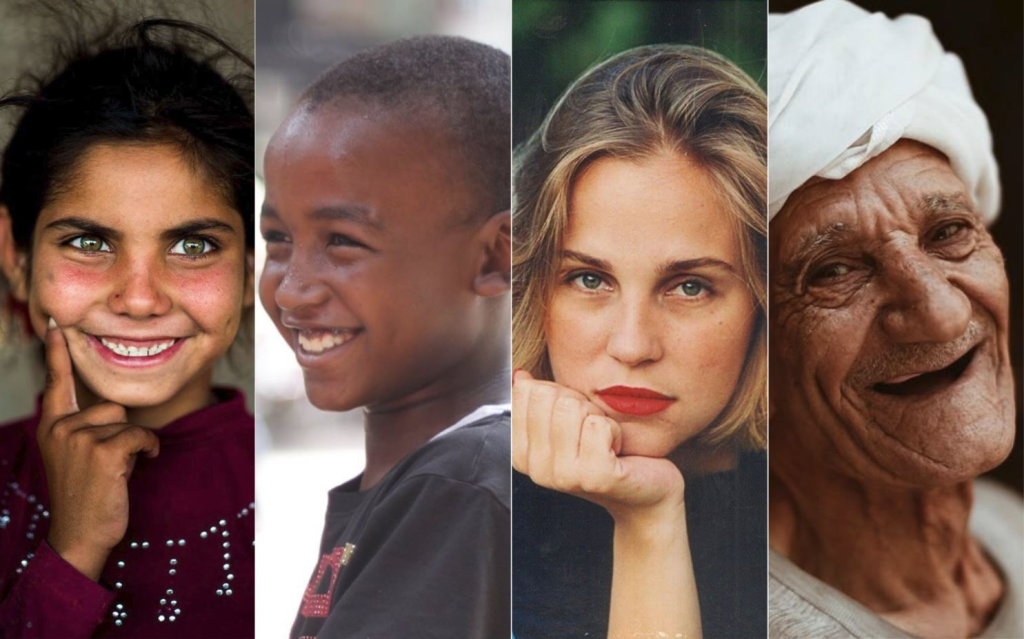
Faces of modern Egypt
This question of what makes people who they are is extremely complicated, and there is no clear answer, but what is clear is that there are myriad factors contributing to identity in general, and especially Egyptian identity. There is no doubt that a country with such a rich history and culture cannot be defined by a single era, even if it is the most defining one to some non-Egyptians who are unaware of the rest of Egypt’s diverse history.
Populations are influenced by every period. The children of incoming peoples who mix with the existing population, living all their lives and dying in Egypt, are undoubtedly Egyptian. To necessitate some idea of racial or ethnic attribution to qualify as being Egyptian is a throwback to notions of ethnonationalism that ingrained a dangerous sense of superiority over others and led to wars causing an estimated 25-35 million casualties in the 20th century.
Moreover, even if race is used as a qualifying factor for nationality, there has been so much intermingling between then-foreigners and those living in Egypt at any given time that current Egyptians are a great hodgepodge of many races and ethnicities (such words are used with a grain of salt) from many eras.
Every conqueror and every colonizing people has stamped their stamp on those residing in Egypt at the time, leading to an indiscriminately diverse heritage that cannot be fully classified or discerned through singular racial terms.
In addition, identity is not singular. People have intersecting identities that express different aspects of how they view themselves. A person born to Egyptians who has lived in the United States all their life may consider themselves American rather than Egyptian, Egyptian-American, Egyptian, or anything in between. Lebanese-French author Amin Maalouf says, in the introduction of his book “On Identity”:
“What makes me myself rather than anyone else is the very fact that I am poised between two countries, two or three languages and several cultural traditions. It is precisely this that defines my identity. Would I exist more authentically if I cut off a part of myself?”
Maybe nationality is not even how they define themselves, instead opting for other markers of identity. In the end, identity is about what a person truly considers themselves – who they ‘fit in’ with, what shared traditions and cultural values exist between a person and other people in the same identity groups. Maalouf also says that:
“Identity can’t be compartmentalised. You can’t divide it up into halves or thirds or any other separate segments. I haven’t got several identities: I’ve got just one, made up of many components in a mixture that is unique to me, just as other people’s identity is unique to them as individuals.”
Any Egyptian can consider themselves Egyptian, but they cannot exclude any other who considers themselves also Egyptian.
In this vein, Egypt for Egyptians should come to mean Egypt for everyone who considers themselves Egyptian – that this rich culture, which includes Cleopatra, should be shared by all Egyptians, regardless of skin color. It should mean that Egypt with all of its ancient and modern heritage is for all Egyptians.
Some Nubians or other people from the south of Egypt may post a picture of the black actress who played Cleopatra which sparked outrage and point out that they have more resemblance to her than to historical Cleopatra. Such a person would not do so because it is historically inaccurate, but are Nubians not Egyptians, too? What about Bedouins from Sinai? Or the children of immigrants that came from Sudan, for example, decades ago and mixed with Egyptians? Too soon? What about their great grandchildren?
This is why it is important to recognize that Egypt is for all Egyptians, and as we protect the accuracy of Cleopatra’s depiction, we should also depict the accuracy of Egypt’s diverse racial landscape.
Omar Auf is deputy senior editor at the Cairo Review of Global Affairs. Auf holds a Master of Global Affairs degree with a regional and international security concentration from the American University in Cairo, and a Bachelor of Arts in economics from Sciences Po Paris. He has previously worked and published in independent media organization Mada Masr and as an assistant editor at the Cairo Review.
Credit: Egyptian Street
Leave a Reply