
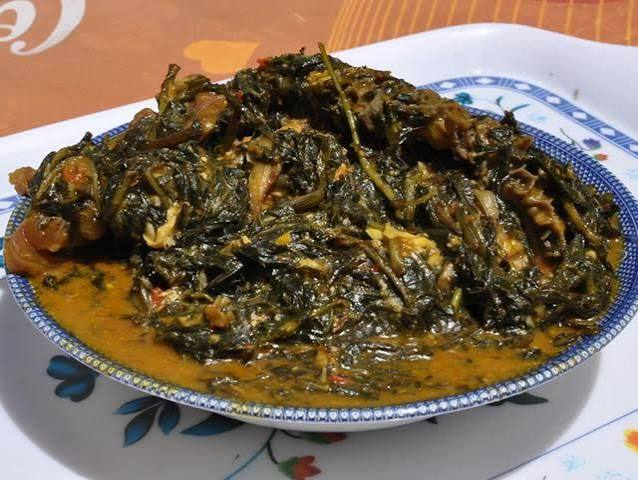
Ofe Onugbu holds almost same cultural and traditional value as Oji (kola nut) in Igbo land. It is far more than a meal, its historical significance, unwavering indicator of wellbeing and goodwill cannot be overemphasised.
Ofe Onugbu, popularly known as Bitterleaf Soup, is a highly cherished traditional delicacy originating from the Igbo people of southeastern Nigeria, particularly and primarily associated with Anambra State. Despite its intimidating name, the soup is actually not bitter at all; the bitter leaves (Vernonia amygdalina) are meticulously washed and squeezed repeatedly until the intense bitterness is completely rinsed out before cooking.. In Igbo culture, it is far more than a meal; it acts as an emblem of community, hospitality, and resilience, and is routinely served at weddings, festivals, family gatherings and cultural events.
The cultural and symbolic significance of Ofe Onugbu centers around several core themes:
- Resilience and Strength: The dish gets its name from the bitterleaf plant (Vernonia amygdalina). Culturally, the process of washing the leaves to remove their natural bitterness and transform them into a sweet, rich soup mirrors the Igbo philosophy of overcoming life’s hardships and finding strength in adversity.
- Hospitality and Togetherness: At Igbo events, offering Ofe Onugbu to guests is a profound sign of generosity and honor. The communal preparation and sharing of the soup—often paired with traditional “swallows” like pounded yam(Ji) or cocoyam (Ede), Garri, Nli oka —fosters unity and preserves generational culinary heritage.
- Medicinal Wellness: Beyond its taste, the bitterleaf plant has been used for centuries in traditional medicine to aid digestion, prevent malaria, and boost immunity. Therefore, the soup is revered just as much for its healing, nourishing properties as it is for its flavor.
Leave a Reply