
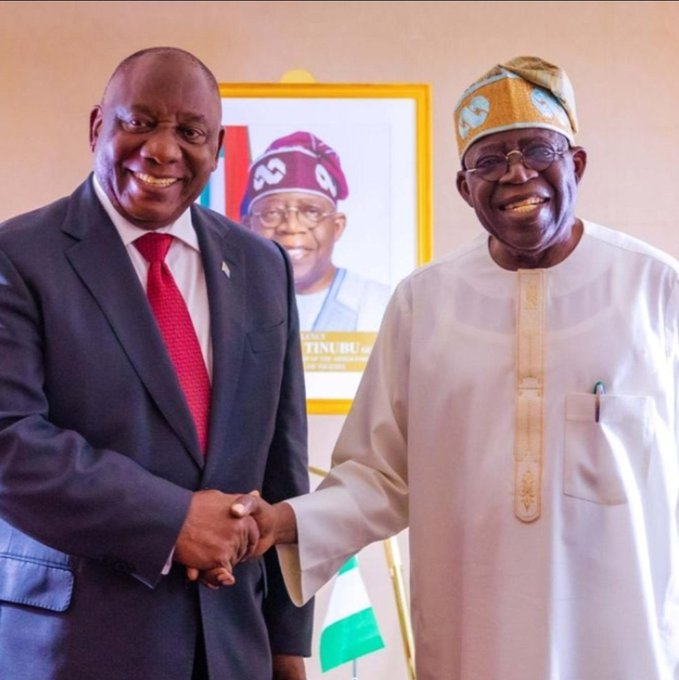
Nigerian President Bola Ahmed Tinubu did decline to personally meet with South Africa’s special delegation. Instead of granting them a direct audience, President Tinubu instructed the visiting team to meet with Nigeria’s Minister of State for Foreign Affairs, Ambassador Sola Enikanolaiye.: The decision stems from mounting diplomatic tensions over renewed xenophobic attacks targeting Nigerians and other African nationals in South Africa. The situation escalated following the recent torture and death of a Nigerian citizen, Chika Ibe, allegedly involving South African police officers in Cape Town.
: Diplomatic sources indicated that the Nigerian government, advised by Foreign Affairs Minister Bianca Odumegwu-Ojukwu, is insisting that South Africa must first formally sign and ratify a Memorandum of Understanding (MoU) on an Early Warning Mechanism. This framework is designed to prevent and de-escalate violence against foreign nationals before further top-level diplomatic talks resume. he diplomatic snub occurs alongside Nigeria’s broader campaign urging the African Union (AU) to take decisive, continental action against xenophobia. In response to the violence, Nigeria has already overseen the emergency evacuation of nearly 600 of its citizens from South Africa.
“The Abuja visit is part of a broader diplomatic campaign by Pretoria to contain growing criticism across the continent over xenophobic violence. In recent weeks, South Africa has intensified diplomatic efforts to ease tensions with African countries following renewed xenophobic attacks. As part of that push, International Relations Minister Ronald Lamola visited Ghana as President Cyril Ramaphosa’s special envoy before leading a delegation to Nigeria. In Abuja, the South African team defended Pretoria’s right to enforce its immigration laws, saying it has a duty to tackle criminality, including offences allegedly involving some immigrants. Nigeria rejected that position, with Ambassador Sola Enikanolaiye describing the attacks as unacceptable and warning they reflected a pattern of Afrophobic violence. He reminded the delegation of Nigeria’s role in the anti-apartheid struggle and said about 98 Nigerians have been killed in previous xenophobic attacks in South Africa. Lamola has also urged African countries to focus on the root causes of migration—including unemployment, conflict and climate change—rather than what he called “finger-pointing” at South Africa.”
Most of the African countries especially the frontline states led by Ghana and Nigeria have rejected the rising xenophobic attacks in South Africa. The African Union have joined in registering their protest on the unacceptable situation in South Africa where nationals of other African countries were intimidated, attacked and driven away from the the country by unruly mobs of South African citizens.
Leave a Reply