
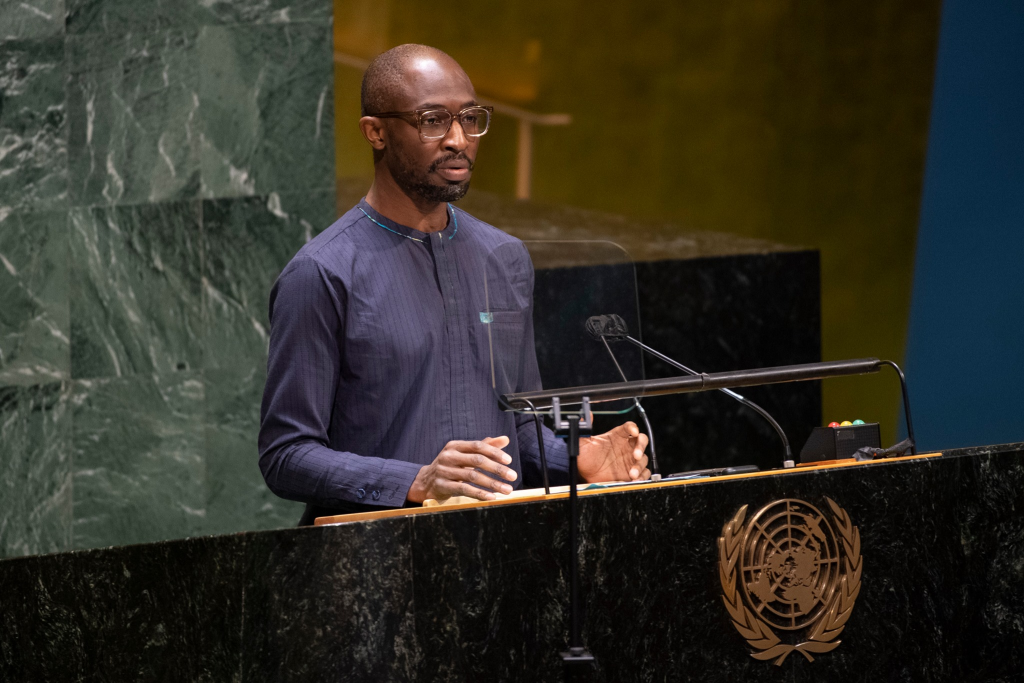
The founding director of African Center, Dr. Uzodinma Iweala, a Harvard trained medical doctor wrote an article in the Foreign Affairs Journal that delineated a critical analysis with fresh perspective on the state of Nigeria.
He took an introspection into Nigeria yester-years, pointing out the obstacles and barriers that kept the country from realizing the dream of building a strong and prosperous nation. He offered his ideas and solutions for remaking a new modern Nigeria.
Dr. Iweala took a clinical undertaking at Nigerian history and foundation from the the time of inception: “In 1914, the British amalgamated several of their West African colonial and commercial entities into one territory, under a single governor-general, Frederick Lugard—without, of course, the participation of the area’s ethnically and religiously diverse population. In one stroke, some 18 million people were lumped together in a single sprawling colony: “Nigeria,” a name that had been blithely coined by Lugard’s future wife, the journalist Flora Shaw. The population’s heterogeneity conveniently played into the British system of divide and rule, whereby colonial administrators exacerbated ethnic and religious differences to limit opposition.”
Iweala did not see Nigerian democracy as. a functional system for he categorically stated that Nigeria is not really a democratically functioning society, he wrote, “Nigeria is not a democracy constructed for the benefit of the people. Instead, it is and has always been a quasi-authoritarian state, with the roots of repression deeply embedded in its history of British colonial control. Facing up to this reality would allow for a far more honest conversation about Nigeria’s failure to thrive and a more imaginative discussion about how to set the country on the path toward stability and prosperity. It would show that what Nigeria needs is not just a change in leadership but a refounding.”
Iweala was right in stating the obvious that Nigerian democracy was not rooted in full participation of her citizens because the tenants of democracy were absent, he has a verifiable point. How can one explain what is happening with the political parties. They are giving Nigerians the candidates for the highest office of the land, who are incapable of fulfilling the dreams of the masses.
He further wrote that Nigeria cannot afford to emulate foreign democracy wholly without adjusting it to the values of the country, “Nigerians cannot afford to limit their thinking to outdated and flawed U.S. and European models of democracy. After all, these are showing signs of strain even in their home countries.”
Finally, Iweala made some recommendations for Nigeria to arrest the bad situation and make changes inorder to start afresh, “Rather, Nigerians should consider a rotating presidency made up of a council of regional leaders. In deeply divided Switzerland, for example, many decisions are made at the local level, and the national parliament, full of part-time politicians, meets only a few times a year. Rather than an all-powerful centralized executive, the president of the Swiss Confederation is the first among equals in a group of federal councilors. Although there are major differences between Switzerland and Nigeria (including about 200 million people), a Nigerian variant of such a system might reduce tension around any central administration and the resources it controls while allowing the state to better represent the country’s many different constituencies.”
After Dr. Iweala’s article was published; it brews some controversy particularly on the issue of remaking a new Nigeria through dissolution and reconstituting a new and willing nation. Nigerian policy makers and ruling class need to read his persuasive article, rather than burying their heads in sand and pivoting “see no evil” and “see no evil” mindset.
Dr. Iweala recently gave interview to Dr. Ruben Abatti of Arise Television.
Article click : Nigeria’s Second Independence by Uzodimma Iweala
Leave a Reply