
• Skip to main content
  • Skip to secondary menu
  • Skip to primary sidebar
  • Skip to footer
AFRIPOL

AFRIPOL

  • Home
  • About Us
  • Mission Statement
  • Articles
  • Book Review
  • Archive
  • Contact Us

Nigeria’s Credit Rating downgraded by Moody, cutting economy into Junk While government bonds nosedived

January 31, 2023 by AFRIPOL Leave a Comment

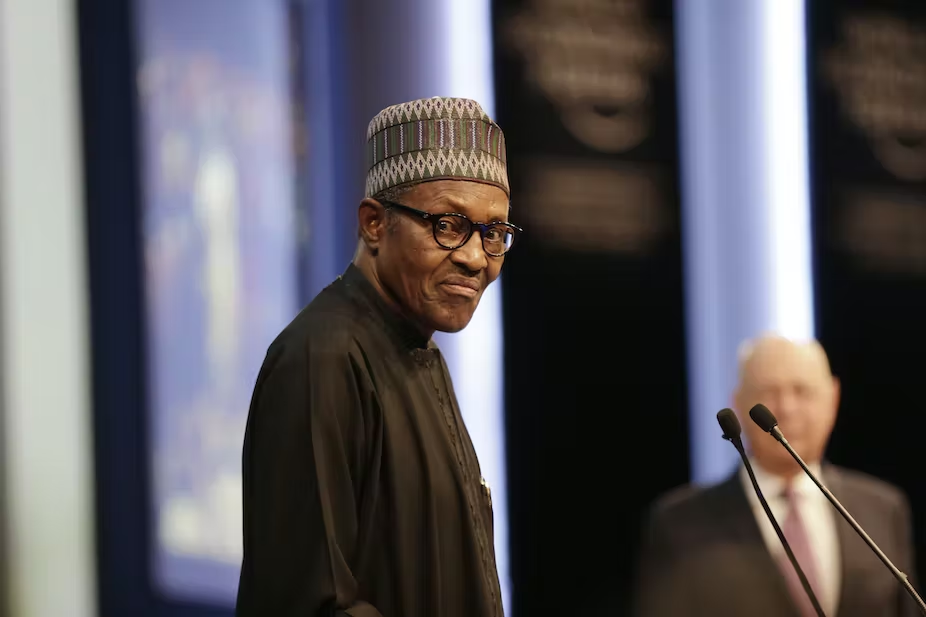
Nigerian President Buhari

Moody’s Investors Service  has downgraded Nigeria’s credit rating from B3 to the poor rating of Caa1, forecasting that the government’s fiscal and debt position are in peril without any feasible change in the nearest future.

Moody said, “The review for downgrade focused on Nigeria’s fiscal and external position and the capacity of the government to address the ongoing deterioration – other than by alleviating the burden of its debt through any form of default, including debt exchanges or buy-backs”.

This downgrading immediately triggered the government bonds to fall. “Longer-dated bonds were down the most, with the dollar-denominated 2051 Eurobond falling more than 2.8 cents in the dollar to 68.758 cents according to Tradeweb data . Only the Eurobond maturing this year fell less than 1 cent.”


  • “Nigeria’s sovereign-risk premium jumped the most in three months on Monday after Moody’s Investors Service downgraded the country deeper into junk. The extra yield investors demand to own the West African country’s dollar debt rather than Treasuries widened 49 basis points to 780, according to JPMorgan Chase & Co. data. The rate on the nation’s 2032 bonds jumped 56 basis points to 12%, also the most since October Forward contracts on the currency traded 28% weaker than the official rate on the one-year tenor.”

Reuters reported: “Nigeria’s state oil firm spent 4.39 trillion naira ($9.54 billion) on a petrol subsidy last year, which the government has blamed for the declining state of its public finances at the same time as oil production has been throttled by theft and pipeline vandalism.

Moody’s said it expects just the interest payments on Nigeria’s debt to take up about half of the government’s revenue in the medium term, up from 35% in 2022. It also sees the debt-to-GDP ratio rising to 45%, up from 34% last year and 19% in 2019.

The International Monetary Fund estimates the country spent 80% of revenues on servicing debt last year, a ratio that it reckons could rise to 100%.

Nigeria’s finance minister Zainab Ahmed said the country’s debt trajectory was sustainable in an interview with Bloomberg TV earlier in January and that the plan was to bring the debt service-to-revenue ratio down to 60% in 2023.”

Filed Under: Articles, Strategic Research & Analysis

Reader Interactions

Leave a Reply Cancel reply

Your email address will not be published. Required fields are marked *

Primary Sidebar

More to See

UN Chief speaks On the International Day of Remembrance of the Victims of Slavery (videos)

March 24, 2026 By AFRIPOL

President Cyril Ramaphosa’s Powerful Tribute to Jesse Jackson (video)

March 10, 2026 By AFRIPOL

RSS AllAfrica News: Latest

  • Uganda: City Developers Risk Losing Occupancy Permits Over Trees
    [Independent (Kampala)] Kampala -- Developers in Kampala who fail to plant trees on their properties will be denied occupancy permits under new environmental regulations being introduced by the Kampala Capital City Authority (KCCA).
  • Uganda: Nebbi Security Sweep Nets Two Suspects Over Military Equipment Possession
    [Nile Post] A joint intelligence-led security operation in Nebbi Municipality has led to the arrest of two suspects found in possession of assorted military and government stores.
  • Uganda: Seven-Year-Old Kidnapped, Killed in Kyenjojo
    [Nile Post] Police in Kyenjojo are holding two suspects accused of orchestrating the kidnap of a seven- year -old boy and later killed him after demanding ransom.
  • Uganda: Tororo Municipality Faces Multi-Million Revenue Loss As Lorry Parking Levy Standoff Persists
    [Nile Post] Tororo Municipal Council's efforts to increase locally generated revenue have suffered a major setback following a prolonged standoff involving municipal authorities, transport operators and district leaders.
  • South Sudan: South Sudan's Sexual Violence Crisis - More Than a Wartime Phenomenon
    [ISS] The persistent crisis exposes serious failures by the state, peacekeeping missions and justice mechanisms tasked with protecting civilians.
  • South Africa: 'Phantsi, Afrophobia!' - Cape Town Artists and Activists Reject Hatred
    [GroundUp] World Refugee Day events show "African solidarity"

Tags

Achebe Africa Anambra Boko Haram Buhari CBN Corona Virus Egypt Igbo IMF Inflation Jonathan Kenya Nigeria Okonjo Iweala Peter Obi Sanusi Senate Soludo South Africa Soyinka United States
  • Facebook
  • Instagram
  • Twitter
  • YouTube

Archives

Footer

Africa Political and Economic Strategic Center, AFRIPOL is foremost a public policy center whose fundamental objective is to broaden the parameters of public policy debates in Africa. To advocate, promote and encourage free enterprise, democracy, sustainable green environment, human rights, conflict resolutions, transparency and probity in Africa.

Recent

  • Nigerian American OG Anunoby and Knicks win NBA Finals
  • Kemi Badenoch: ‘Nigeria is an oil producing country that has never had electricity’
  • Japanese goalkeeper Zion Suzuki has Ghanaian Heritage
  • Peter Obi: ‘Corruption kills Entrepreneurship’ (video)
  • Christina Koch, NASA astronaut: ‘I studied in Ghana’

Search

Tags

Achebe Africa Anambra Boko Haram Buhari CBN Corona Virus Egypt Igbo IMF Inflation Jonathan Kenya Nigeria Okonjo Iweala Peter Obi Sanusi Senate Soludo South Africa Soyinka United States

Copyright © 2026 · AFRIPOL