
Written By DR. IFEANYI NSOFOR on npr
The world is in the midst of a monkeypox outbreak. The World Health Organization has recorded more than 500 cases in 30 countries this year – including the United Kingdom, the United States and a number of European nations.
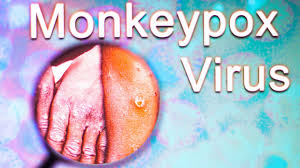
And how do Western media outlets illustrate the story? The BBC, the Independent, CNBC and ABC News are among those that have used a stock photo of a Black person with monkeypox blisters.
It would be as if Nigeria, which has seen 247 cases since 2017 and 66 so far this year, would use photos exclusively of white people with monkeypox in covering its national epidemic.
Absurd, right?
Africans and health equity advocates have been swift in reacting to the Western media’s use of Black arms and faces with monkeypox. Nigerian journalist Mercy Abang tweeted, “Here is an example of media bias at its finest; monkeypox has been reported in nations worldwide, but a search shows only [photos of] blacks. Tragic.”
Mike Roemer/Getty Image
Dr. Madhu Pai, professor of epidemiology and global health at McGill University, tweeted, “Journalists and editors of global North media outlets badly need training on how to not be racist & stigmatizing in their reporting Ebola, Covid, monkeypox.”
The coverage echoes media reporting following the outbreak in Nigeria in 2017. I was a co-author of a BMJ Global Health Journal review of media coverage of monkeypox. Here’s how a story from the publication “Voice from Europe” described the first case of monkeypox in England in 2018: a “horrible Nigerian disease called monkeypox spreads in the United Kingdom for the first time.”
The message then and now: Blame Africa for monkeypox.
Here are my suggestions for Western journalists on how to frame the monkeypox story – and advice for public health officials on how to deal with the spread of this disease.
Present the facts.
The World Health Organization describes monkeypox as a zoonosis: a disease transmitted from animals to humans. The virus primarily occurs in Central and West Africa, often in proximity to tropical rainforests. However, it can crop up anywhere in the world.
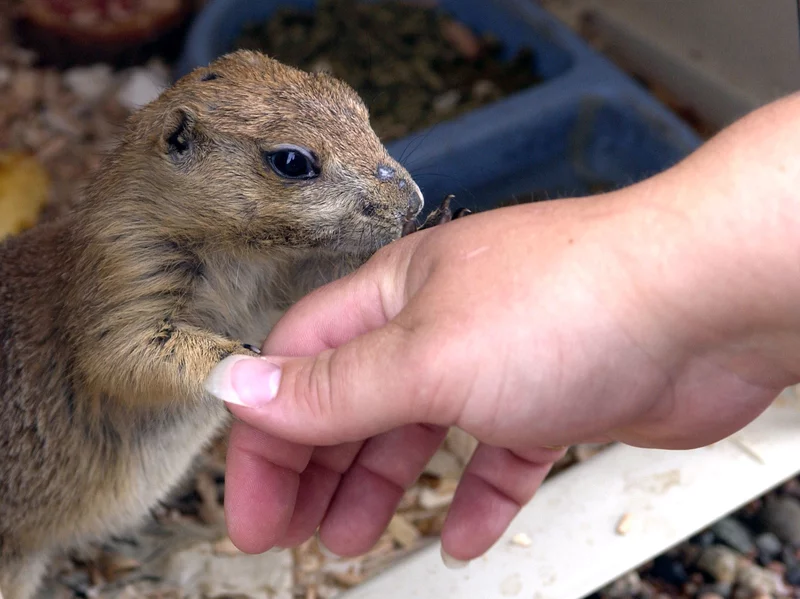
In 2003, the first outbreak of monkeypox outside Africa was reported in six U.S. states – Illinois, Indiana, Kansas, Missouri, Ohio and Wisconsin. That outbreak was caused by human contact with infected prairie dogs kept as pets. Prairie dogs are herbivorous burrowing mammals native to the grasslands of North America; the pets were reportedly infected after an Illinois animal distributor had reportedly housed them near imported small mammals from Ghana.
That outbreak resulted in more than 70 reported cases, all transmitted by contact with an infected prairie dog or with a person who had been infected by a prairie dog.
Genetic evidence shows that the international outbreak likely originated in Nigeria, but the virus has likely been spreading by person-to-person contact in Europe and the U.K. for months.
Investigate the reasons behind the current outbreak.
There has always been a threat of monkeypox spreading internationally. But it hasn’t until now. So the job for journalists is to talk to scientists who are trying to see if something changed about the virus and the way it spreads.
Look at how Africa is responding to monkeypox.
There is no need for the affected countries to reinvent the wheel in fighting the spread of this virus. Africa has the expertise to prevent, detect and respond to infectious disease outbreaks. We do this routinely, including for monkeypox. Recently, Ifedayo Adetifa, director-general of the Nigeria Centre for Disease Control, tweeted about Nigeria’s monkeypox experience:
Nigeria’s 1st case of #MonkeyPox was identified in 1971 and after a 40-year hiatus, monkeypox revisited in 2017. Since then, we have experienced sporadic cases and managed them. Now that there is increased attention being paid to #Monkeypox, these are @NCDCgov resources on the subject.
The resources Adetifa shared includes the National Monkeypox Public Health Response Guidelines. The document provides important information that would help Western nations in responding to this outbreak as well as improve detection and prevention of future outbreaks. One important lesson from Nigeria is the setting up of a monkeypox emergency operations center to coordinate all aspects of the response, led by a senior staff member of the Nigeria Centre for Disease Control and supported by other global health agencies working in the country.
In conclusion, here’s what I’d tell my kids.
If my two daughters, Yagazie, age 12, and Chimamanda, age 9, were to ask me to explain what’s happening with monkeypox, here’s what I’d tell them: Monkeypox outbreaks are common in Africa but can happen anywhere. The infection is transmitted from some animals to humans. Human to human transmission happens when one comes into contact with sores and body fluids of those infected. Cases are now being reported in countries outside Africa, and this is scaring people in those countries.
I would also give them some monkeypox prevention advice: Monkeypox is not as deadly as it looks. The strain currently circulating is not typically fatal. However, they must always remember to wash their hands anytime they get back home from an outing, just as their mother and I have taught them to do – that’s one of the measures that helps keep you safe from infection
And if they wanted to know why there’s biased reporting in Western media, I’d tell them that global health has a colonial history and some Western media outlets are holding on to the vestiges of colonialism by depicting Africa as a backwards, disease-ridden continent. I would also tell them not to allow the media — or for that matter, anyone — make them feel inferior because they are Black, and they must keep pushing back.
Dr. Ifeanyi Nsofor is the director of policy and advocacy at Nigeria Health Watch and is a senior New Voices fellow at the Aspen Institute.
Leave a Reply