
• Skip to main content
  • Skip to secondary menu
  • Skip to primary sidebar
  • Skip to footer
AFRIPOL

AFRIPOL

  • Home
  • About Us
  • Mission Statement
  • Articles
  • Book Review
  • Archive
  • Contact Us

Nigeria inflation rate at almost 17% while 86% of generated revenue used for debt servicing

May 17, 2022 by AFRIPOL Leave a Comment

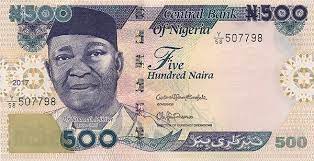
Nigerian currency

Nigeria economy is under performing and the quarterly indicators bear the fact that the economy is floundering and has finally lost its anemic momentum. The rising inflation rate is quite alarming as the numbers from the country’s National Bureau of Statistics detailed that inflationary rate spiked to 16.82% in April from 15.92% in March of this year.

“Food-price inflation rose to 18.37% in April from 17.20% in the previous month, reflecting increases in the prices of bread and cereals, potatoes, yam and other tubers, wine, fish meat and oils, the NBS said. Economists said inflation is rising in the West African country due to higher electricity prices and increased costs to transport goods and services. The fuel scarcity in February resulted in sharp rises in the cost of gasoline and diesel, they said.”

“Diesel used by heavy trucks to transport farm produce and manufactured produce is currently selling at 640 to 650 Nigerian naira ($1.54-$1.57) per liter, up from NGN300 per liter seven months ago, resulting in manufacturers and service providers passing the higher cost to consumers. The price of gasoline rose to NGN300 to NGN4 00 per liter in February during the fuel scarcity, but is no longer in short supply. It is currently selling at the government prescribed pump price of NGN165 per liter.”

According to Nigeria’s Debt Management Office the country utilized 86% of her generated revenue in servicing its crushing debt. The total debt of Nigeria at December of 2021 stood at $94.166bn. Nigeria is barely left with reasonable revenue after debt servicing. And this  is the reason that Nigeria resorted to borrowing to finance her annual budget of $39.8 Billion of the year 2022..

The compelling “major reason for Nigeria’s high debt service-to-revenue is its low revenue generation. Analysts are worried that Nigeria is not raising enough revenue from an economic size of over $400 billion, wondering why policy makers are not thinking out of the box.”

Thinking outside box is recommendable. Intrinsically, the country must find a means to generate bigger and more revenue that it badly needed to run the country.. The government cannot function with 14% revenue that remained after servicing of the national debt. But taxing businesses and citizens must not be the option. The business entities especially the small business has been overburden with taxes and levies. In addition, the cost of energy is crushing local producers. Since electricity is not functional, the producers are using diesel which is also very expensive for their generators .

Nigeria erratic monetary and fiscal policies are not pro-growth. The high taxes from federal, state and local governments are not properly synchronized and streamline to promote growth while the incentives for economic growth are absent which makes growth virtually impossible.. The  high inflation rate coupled with average maximum lending rate of 30.73 per cent discourage borrowing for expanding and starting business.  Therefore it make sense to abandon producing goods locally in favor of importation because of high cost of production in the country. Then together with instability and lack of protection of lives and property the economy looks to be permanently depressed.

Filed Under: Articles

Reader Interactions

Leave a Reply Cancel reply

Your email address will not be published. Required fields are marked *

Primary Sidebar

More to See

UN Chief speaks On the International Day of Remembrance of the Victims of Slavery (videos)

March 24, 2026 By AFRIPOL

President Cyril Ramaphosa’s Powerful Tribute to Jesse Jackson (video)

March 10, 2026 By AFRIPOL

RSS AllAfrica News: Latest

  • Africa: Rwanda and South Africa - From Diplomatic Frost to Strategic Partnership and Greater People-to-People Mobility
    [allAfrica] After more than a decade of diplomatic estrangement, Rwanda and South Africa appear to be taking meaningful steps toward rebuilding a relationship long marked by suspicion, political tensions, and missed opportunities. Recent high-level engagements between Kigali and Pretoria suggest a growing recognition that Africa's future is better served by cooperation than confrontation. As both […]
  • Tanzania: My Christian Father, My Muslim Mother, and My Country's Truth
    [allAfrica] My father is a devout Lutheran. My mother is a practicing Muslim. I was educated at a Catholic school. This is not an unusual story in Tanzania - it is a very ordinary one.
  • Ghana: Ghana Pip Panama in World Cup Opener... Team Arrives in Rhode Island Base to Prepare for England
    [Ghanaian Times] Caleb Yirenkyi bundled in the winning goal in the fifth minute of stoppage time, to send thousands of Ghanaians in Canada into a frenzy.
  • Nigeria: Retired Military Officers Warn Against Ethnicising Insecurity
    [Vanguard] Retired military officers and associates of the late Major General Rabe Abubakar have cautioned Nigerians against blaming the North for the country's worsening insecurity, insisting that terrorism, banditry and kidnapping have evolved into a nationwide threat affecting all regions.
  • Rwanda: Genocide Survivors Urge Australia's Griffith University to Disassociate With Judi Rever
    [New Times] Genocide survivors' organisations from Rwanda and across the diaspora have called on Australia's Griffith University to sever any association with Judi Rever, a Canadian author and journalist known for promoting narratives that distort and deny the 1994 Genocide against the Tutsi.
  • Malawi: Mera Cuts Fuel Prices As Malawi Moves to Ease Pump Costs
    [Nyasa Times] Motorists and businesses across Malawi are set to benefit from lower fuel costs after the Malawi Energy Regulatory Authority (MERA) announced significant reductions in the retail prices of petrol, diesel, and kerosene, effective midnight on 19 June 2026.

Tags

Achebe Africa Anambra Boko Haram Buhari CBN Corona Virus Egypt Igbo IMF Inflation Jonathan Kenya Nigeria Okonjo Iweala Peter Obi Sanusi Senate Soludo South Africa Soyinka United States
  • Facebook
  • Instagram
  • Twitter
  • YouTube

Archives

Footer

Africa Political and Economic Strategic Center, AFRIPOL is foremost a public policy center whose fundamental objective is to broaden the parameters of public policy debates in Africa. To advocate, promote and encourage free enterprise, democracy, sustainable green environment, human rights, conflict resolutions, transparency and probity in Africa.

Recent

  • Nigerian American OG Anunoby and Knicks win NBA Finals
  • Kemi Badenoch: ‘Nigeria is an oil producing country that has never had electricity’
  • Japanese goalkeeper Zion Suzuki has Ghanaian Heritage
  • Peter Obi: ‘Corruption kills Entrepreneurship’ (video)
  • Christina Koch, NASA astronaut: ‘I studied in Ghana’

Search

Tags

Achebe Africa Anambra Boko Haram Buhari CBN Corona Virus Egypt Igbo IMF Inflation Jonathan Kenya Nigeria Okonjo Iweala Peter Obi Sanusi Senate Soludo South Africa Soyinka United States

Copyright © 2026 · AFRIPOL