
• Skip to main content
  • Skip to secondary menu
  • Skip to primary sidebar
  • Skip to footer
AFRIPOL

AFRIPOL

  • Home
  • About Us
  • Mission Statement
  • Articles
  • Book Review
  • Archive
  • Contact Us

Nigeria inflation rate at almost 17% while 86% of generated revenue used for debt servicing

May 17, 2022 by AFRIPOL Leave a Comment

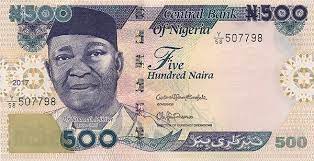
Nigerian currency

Nigeria economy is under performing and the quarterly indicators bear the fact that the economy is floundering and has finally lost its anemic momentum. The rising inflation rate is quite alarming as the numbers from the country’s National Bureau of Statistics detailed that inflationary rate spiked to 16.82% in April from 15.92% in March of this year.

“Food-price inflation rose to 18.37% in April from 17.20% in the previous month, reflecting increases in the prices of bread and cereals, potatoes, yam and other tubers, wine, fish meat and oils, the NBS said. Economists said inflation is rising in the West African country due to higher electricity prices and increased costs to transport goods and services. The fuel scarcity in February resulted in sharp rises in the cost of gasoline and diesel, they said.”

“Diesel used by heavy trucks to transport farm produce and manufactured produce is currently selling at 640 to 650 Nigerian naira ($1.54-$1.57) per liter, up from NGN300 per liter seven months ago, resulting in manufacturers and service providers passing the higher cost to consumers. The price of gasoline rose to NGN300 to NGN4 00 per liter in February during the fuel scarcity, but is no longer in short supply. It is currently selling at the government prescribed pump price of NGN165 per liter.”

According to Nigeria’s Debt Management Office the country utilized 86% of her generated revenue in servicing its crushing debt. The total debt of Nigeria at December of 2021 stood at $94.166bn. Nigeria is barely left with reasonable revenue after debt servicing. And this  is the reason that Nigeria resorted to borrowing to finance her annual budget of $39.8 Billion of the year 2022..

The compelling “major reason for Nigeria’s high debt service-to-revenue is its low revenue generation. Analysts are worried that Nigeria is not raising enough revenue from an economic size of over $400 billion, wondering why policy makers are not thinking out of the box.”

Thinking outside box is recommendable. Intrinsically, the country must find a means to generate bigger and more revenue that it badly needed to run the country.. The government cannot function with 14% revenue that remained after servicing of the national debt. But taxing businesses and citizens must not be the option. The business entities especially the small business has been overburden with taxes and levies. In addition, the cost of energy is crushing local producers. Since electricity is not functional, the producers are using diesel which is also very expensive for their generators .

Nigeria erratic monetary and fiscal policies are not pro-growth. The high taxes from federal, state and local governments are not properly synchronized and streamline to promote growth while the incentives for economic growth are absent which makes growth virtually impossible.. The  high inflation rate coupled with average maximum lending rate of 30.73 per cent discourage borrowing for expanding and starting business.  Therefore it make sense to abandon producing goods locally in favor of importation because of high cost of production in the country. Then together with instability and lack of protection of lives and property the economy looks to be permanently depressed.

Filed Under: Articles

Reader Interactions

Leave a Reply Cancel reply

Your email address will not be published. Required fields are marked *

Primary Sidebar

More to See

Ghana Govt. warned those organizing protest against Nigerians (video)

August 2, 2025 By AFRIPOL

Ghana’s Minister issues Press Release after Meeting her Nigerian Counterpart Bianca Ojukwu on “Nigeria Must Go” Imbroglio

August 1, 2025 By AFRIPOL

RSS AllAfrica News: Latest

  • Central Africa: Rwanda-DRC Peace Deal - A Breakthrough or Another Mirage?
    [allAfrica] After 30 years of bloodshed, proxy wars, and political theatre, the Democratic Republic of Congo and Rwanda have signed a peace agreement that many are calling historic. But in the Great Lakes region, where hope and disappointment walk side by side, it is fair to ask: Is this the beginning of peace--or another carefully […]
  • Benin: Patrice Talon Declared Removed From Office by the Military
    [allAfrica] Beninese soldiers appeared on public television early Sunday morning to announce that they had ''removed from office'' Patrice Talon, the head of state.
  • Tanzania: Appeal for the Release of Political Prisoners
    [Agenzia Fides] Dar es Salaam -- Political prisoners must be released and the bodies of missing persons returned. This is the joint appeal launched to the Tanzanian government by the embassies of Great Britain, Canada, Norway, Switzerland, Belgium, Denmark, Finland, France, Germany, Ireland, Italy, the Netherlands, Poland, Slovakia, Spain, Sweden, and the European Union delegation […]
  • Cote d'Ivoire: Forum On Social Cohesion in Ivory Coast - Being Peacemakers in Everyday Life
    [Agenzia Fides] Abidjan -- "Peace (Shalom) is holistic and means harmony with oneself, with others, with one's surroundings, and with God," said Father Michel Savadogo, Executive Director of the Shalom Network for Conflict Transformation and Reconciliation (REST-COR) and member of the Society of African Missions, at a forum in Yopougon (Abidjan) on social cohesion and […]
  • Mozambique: Placed On Using Bank Cards Abroad
    [AIM] Maputo -- The Bank of Mozambique, in its role as regulator of the national financial system, has announced that companies and individuals can only use their bank cards abroad to make payments of up to six million meticais (94,000 US dollars at the current exchange rate) per year.
  • Mozambique: Mozambique Removed From EU List of High-Risk Jurisdictions
    [AIM] Maputo -- The European Commission on Thursday removed Mozambique from the European Union's list of high-risk jurisdictions with strategic deficiencies in combating financial crime, where it had been included since 2023, following an update from the Financial Action Task Force (FATF).

Tags

Achebe Africa Anambra Boko Haram Buhari CBN Corona Virus Egypt Igbo IMF Inflation Jonathan Kenya Nigeria Okonjo Iweala Peter Obi Sanusi Senate Soludo South Africa Soyinka United States
  • Facebook
  • Instagram
  • Twitter
  • YouTube

Archives

Footer

Africa Political and Economic Strategic Center, AFRIPOL is foremost a public policy center whose fundamental objective is to broaden the parameters of public policy debates in Africa. To advocate, promote and encourage free enterprise, democracy, sustainable green environment, human rights, conflict resolutions, transparency and probity in Africa.

Recent

  • ‘I’m very proud of what we export to Nigeria’ – Boris Johnson, former UK prime minister
  • Poem: ‘Obinna’  by Emeka Chiakwelu
  • Ngozi Okonjo-Iweala @ G20 South Africa (pictures)
  • Falana: ‘No governor or minister has constitutional power to demolish buildings’ (video)
  • Mike Tyson: ‘My trip to Congo was a life-changing experience’

Search

Tags

Achebe Africa Anambra Boko Haram Buhari CBN Corona Virus Egypt Igbo IMF Inflation Jonathan Kenya Nigeria Okonjo Iweala Peter Obi Sanusi Senate Soludo South Africa Soyinka United States

Copyright © 2025 · AFRIPOL