
By Sodiq Omolaoye, Abuja Guardian
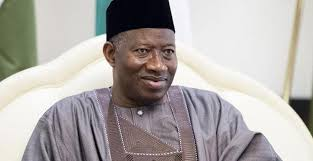
Former President Goodluck Jonathan has blamed past leaders for not doing enough to unite the country.
He said Nigeria’s founding fathers, including, former Premiers of the Western, Northern and Eastern regions; Obafemi Awolowo, Ahmadu Bello & Nnamdi Azikiwe never had nationalistic views but were focused on regional development.
Jonathan, who stated this yesterday, at the one-year memorial lecture in honour of the late Captain Hosa Okunbo in Abuja, said that the efforts of the past leaders did not yield positive results.
Speaking on the topic, “Lasting Legacy: Key to Nigeria’s Development Issues”’ Jonathan explained that the leaders did their best to also position the country for economic growth and development, but the attempts yielded more to centrifugal forces that reinforced ethnic cleavages.
The ex-president noted that the present crop of leaders inherited a country that was already balkanised into three regions and later four.
According to him, rather than see Nigeria as a united entity, they (past leaders) saw it as a country of different nationalities under which the regions would pursue their different development agendas.
Jonathan said, “I believe that the legacy of nationhood and roots of unity were weak at Nigeria’s independence and not much has been done since then to strengthen the base of the union.
“At independence in 1960, the colonial masters handed our country back to our first indigenous leaders, many of whom played key roles in the crusade for liberation.
“The leaders did their best to position the country for economic growth and development. But their approach in the efforts to unite a fragile country from the standpoint of different ethnic nationalities did not produce the desired results.
“As the country progressed, it yielded more to centrifugal forces that reinforced ethnic cleavages. We inherited a country that was balkanised into three regions and later four regions. This probably prompted the political leaders at independence to concentrate more on their own regions.
“Many countries, like Nigeria, are made up of different cultural and linguistic nationalities. The difference is that while many of these countries have overcome the negative manifestations of undue ethnic glorification, Nigerians have continued to exalt ethnic nationality over and above the country.”
The former President, however, admitted that the system operated by the heroes past worked well during their time because there were significant developments recorded in the regions.
He said, “The level of development that was found in the Western region headed by late Chief Obafemi Awolowo was tremendous. The free education policy, establishing the University of Ibadan, establishing the first television station in probably entire black Africa and other laudable developmental projects, were positive indicators of the viability of the regions.
“This clearly showed a strategic development trajectory. If we, as a nation, had continued with the regional administration policy, probably the problems we are confronting today would not have been there.”
He regretted that along the development trajectory, Nigeria lost focus and the system became conflicted, especially when the military overthrew the civilians’ administration and decided to centralise governance, by creating a 12-states structure.
Jonathan said: “Along the lines, I believe proper legacies were not left behind for the younger people. After the amalgamation, from that time and now, we have seen all regions fighting and struggling to control the affairs of the country. When the military took over, they changed the regional structure of conflict to a unitary system of government by creating 12 states to dilute the effect of regions.
“I am not condemning the issue of regions, probably if we had followed the regional development map this country would have been better off. For instance, when you look at what happened in the Western region where Obafemi Awolowo came up with the idea of free education. The Southwest was regarded as one of the most developed parts of Africa then.
“So probably, if we had continued that way the country would have been better off and maybe we won’t have insecurity like we are having today. But the military changed the system and wanted the country to go in one direction.
Leave a Reply